Stockholm- A Culture Capital

Stockholm- A Culture Capital
“The world is a book and those who do not travel read only one page.” – St. Augustine

Tuesday, June 28, 2011

Moscow + Summer Sunshine = LOVE

I have been living in this city for quite a while now, and after months of summer and only a few posts I thought it would be a perfect time to shed new (sun)light on the Russian Capital. Here are some fine-weathered photos from my parents' recent visit to Moscow.

Tsar Cannon- The world's Largest


The Giant Bell that fell from Ivan the Great's Bell Tower

The Kremlin Wall in Alexander's Gardens- it shows the exposed rock which lies underneath the building.


GUM- Perhaps my favorite part of Red square is this grogeous shopping center which is still catering to the Russian Elite but allows even the poppers to use the restroom and enjoy 2 dollar ice cream like they have for decades.


Soldiers in Moscow are as plentiful as ants, but probably don't work as hard. However it is always interesting to see them performiong a well-rehearsed ceremony.


Piggy Backing Momma in front of St.Basil's


My Dad with a lovely Babushka demanding money for photos on Old Arbat Street.


The Drowning Horses fountain comes from old Russian Folklore.


A great shot of one of Stalin's Seven Sisters. 7 Skyscrapers comissioned by Staling to be built in a similar style. I have heard they go as deep into the ground as they are tall and that some of them are connected with a secret 'metro 2'


The most famous tower surrounding the Kremlin-It can tell time!


A colorful shot of Gorky Park on the bank of the Moscow River


A picture of Moscow City, the new development of high rises in Moscow. Taken from 'Sparrow Hills' by the University.


A statue in honor of Alexander the Great


The Church of Christ of the Ascension- Built about 20 years ago after a church on this site was destroyed by Communists.
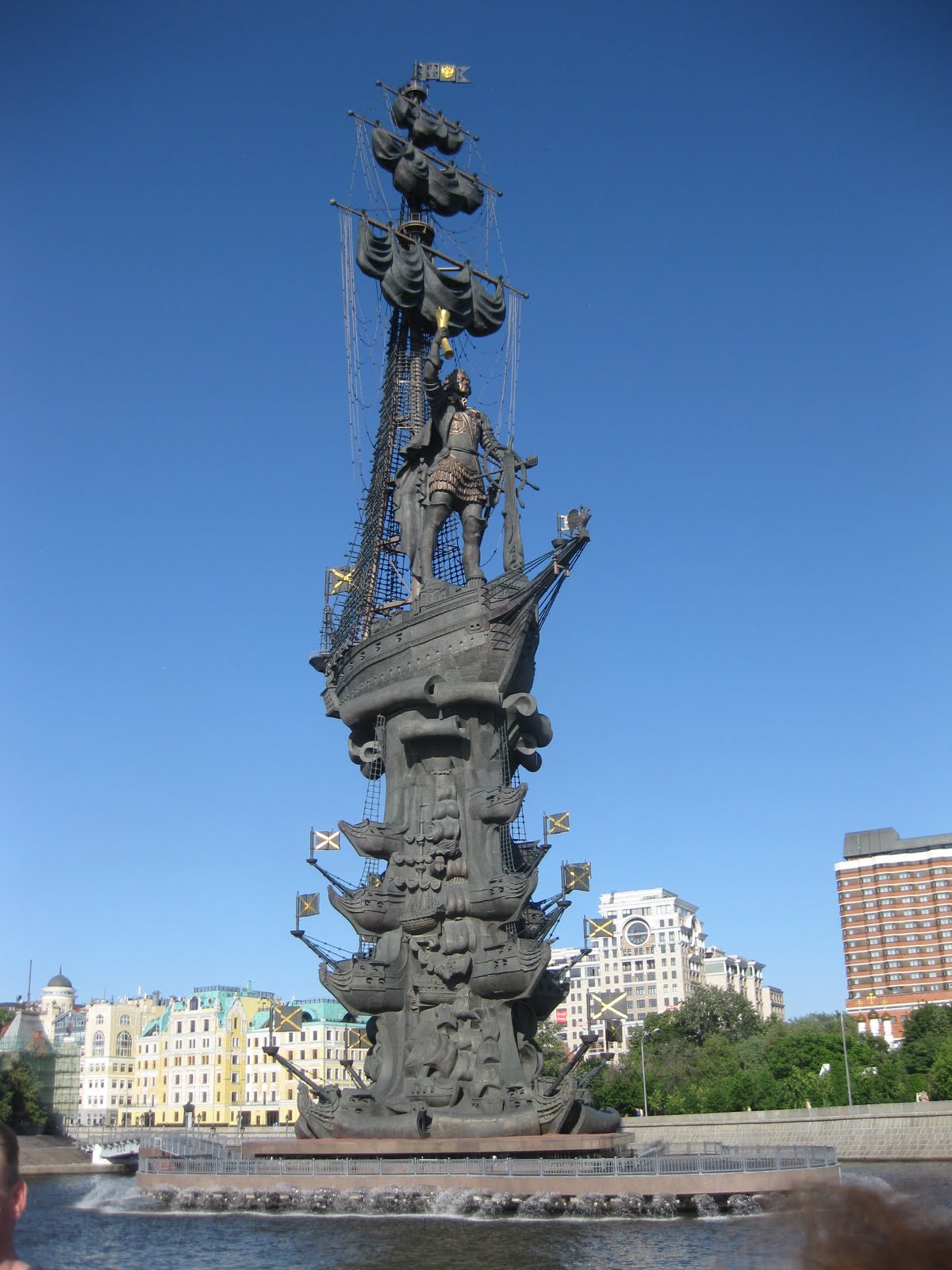

A controversial statue of Peter the Great in the Moscow River. Many Muscovites hate it and think it should be sent somewhere else. Other think that is deserves to be in St.Petersburg as it was founded by Peter.


Gorgeous gardens at Tsvetnoy Bulvar


Tsvetnoy Bulvar


Enjoying some beers and live music from on the Garden Ring in Moscow near Chisti Prudy.


Hotel Metropol near the Bolshoi Theater and Red Square


My lovely parents in front of the gate to Red Sqaure


Good eats have always been the most important thing in my family, other than perhaps the family itself. Since the food didn't change much with the season it's photos were neglected. So here is a shout out to all the great food and coffee enjoyed in Moscow.

Sunday, June 26, 2011

Taste of the Grand Tour


{Isola Bella}
There are so many countries I would love to re-visit but usually the urge to see somewhere new keeps me from a second journey. However I had someone to visit and hopped on the plane for northern Italy. I split my time between the hustle and bustle of the fashion capital Milan and a peaceful sojourn on Lago Maggiore.


{Isola dei Pescatori}
Lago Maggiore is a gorgeous lake surrounded by quaint villages and stylish cities that became wealthy and popular back when the area was part of the ‘Grand Tour’ in Europe. It was nice to relax in the town of Luino with my friend and his family- catered for like a kind with traditional Italian dishes.

The main attraction here is taking the ferries around the lake and visiting the islands in the lake. There is a 3-island 2-islet cluster in the west of the lake, each with its own specific draw.


{Isola Madre}

The first, Isola Madre, is actually an enormous botanical garden that is home to hundreds of gorgeous peacocks and other pheasants.


Next my boat bunked upon the shore of Isola dei Pescatori. Isola dei Pescatori is half residential, half fish-eating paradise with a ring of world class eateries lining the shore of the island and serving up fish caught fresh from the lake.


{Isola Bella}
The last and most impressive island is Isola Bella where most of the island is consumed with an enormous palace commissioned by Carlo III from the House of Borromeo in honor of his wife Isabella. Even more impressive are the statue adorned gardens attached to the nautical beauty of the palace.


{Milan Duomo}
At first I didn’t want to leave the tranquility of Lago Maggiore but once I arrived in Milan the energy was irresistible. Fashion, food, young blood and architecture are the games to be played. I gladly saw the main attractions of the town- Castle, Arc of Peace, the central Duomo, as well as a dip into the clubbing and music scene. Milan, usually deemed a waste of time in tourist books, is exactly the opposite. I will agree that Milan is not a place for people who want to run around taking tours and snapping endless pictures with their fanny packs tied on tight. It is rather a place to see Italian cosmopolitan life and appreciate a city as a local would.


{Arc of Peace}
This time going back to Italy made me realize that a second trip back can turn out nothing like the first one and visiting a country is often more rewarding than getting acquainted with a new one.

Thursday, May 19, 2011

Bloody Mother's Day


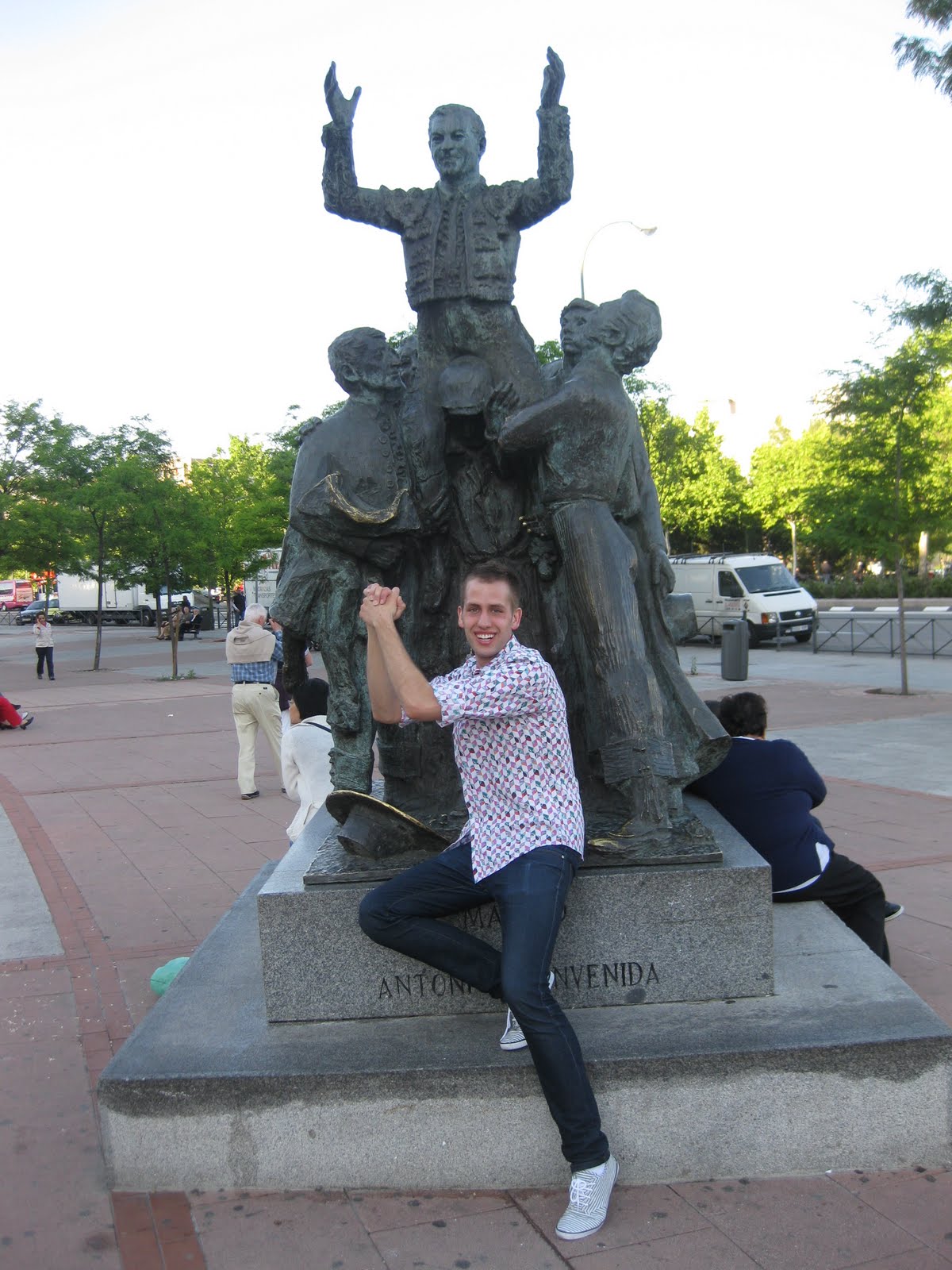
It may seem like an unconventional mother’s day gift, but taking my mom to see a bullfight in Madrid’s famous Las Ventas was exactly how our Sunday evening was spent. Spain’s controversial past time is something dreamed about since childhood with all sorts of cartoons showing a raging ring-nosed bull pound his foot against the sandy turf before he charges at the brave matador. Well the real bullfight displayed this scene fairly accurately, minus the pounding hoof.


The event began with the Spanish sun high in the sky and plenty of Spanish ‘guapos’ young and old were dressed up and waiting for the fight to begin. Trumpets sound and soon the cavalry and matadors with pink capes enter the ring. The matadors are dressed in their colorful suits and begin flapping their capes around the arena, prancing their tightly packed buttocks to get the crowd warmed up.


After the well-received peacocking the bull enters and straight away he sees the pink capes and charges. They run the bull around and then bait him with a horse. He rams into the horse and the spearman on top stabs the bull in the shoulder muscles till his blood starts rolling down his sides and hitting the sand in fat hot drops. Next the matadors stab the bull 2 at a time with 8 colorful banderillas (colorful knife-ended sticks) stick in the bulls back if the matador risking his vital organs can get them in successfully.

Text Color

Finally the fight begins and one matador removes his cap and faces the bull one on one--taking only a red cape and sword into the arena. The two beasts spar to cheers and whistles of the crowd. The Matador dances with death, only centimeters from the sharp horns of the bull and with a yell lances his sword at the raging Torro. All goes to plan and the Matador sinks the sword deep into the bull, toppling him to ground, they finish him with a few short stabs in the neck and then four horses drag the one-ton body by the head across the sand.


The bloody terrain where the bull fell is swept clean and the way is made for the next Torro to be slain.

As fascinating and symbolic as the sport is, I found it to be a one-sided blood bath. I may be under appreciating the risk these Matadors take, but as a spectator it seems like the bulls have no chance of survival, and without the question of ‘who will win?’ I had to feel sad for the bull. It reminded me of cruel children chasing a stray dog around with sticks, and though I would recommend everyone to see this spectacle once. I don’t know if I will put it on the list of ‘Top Ten Ways to Spend Mothers Day'

Sunday, May 15, 2011

Chocolate for Breakfast!


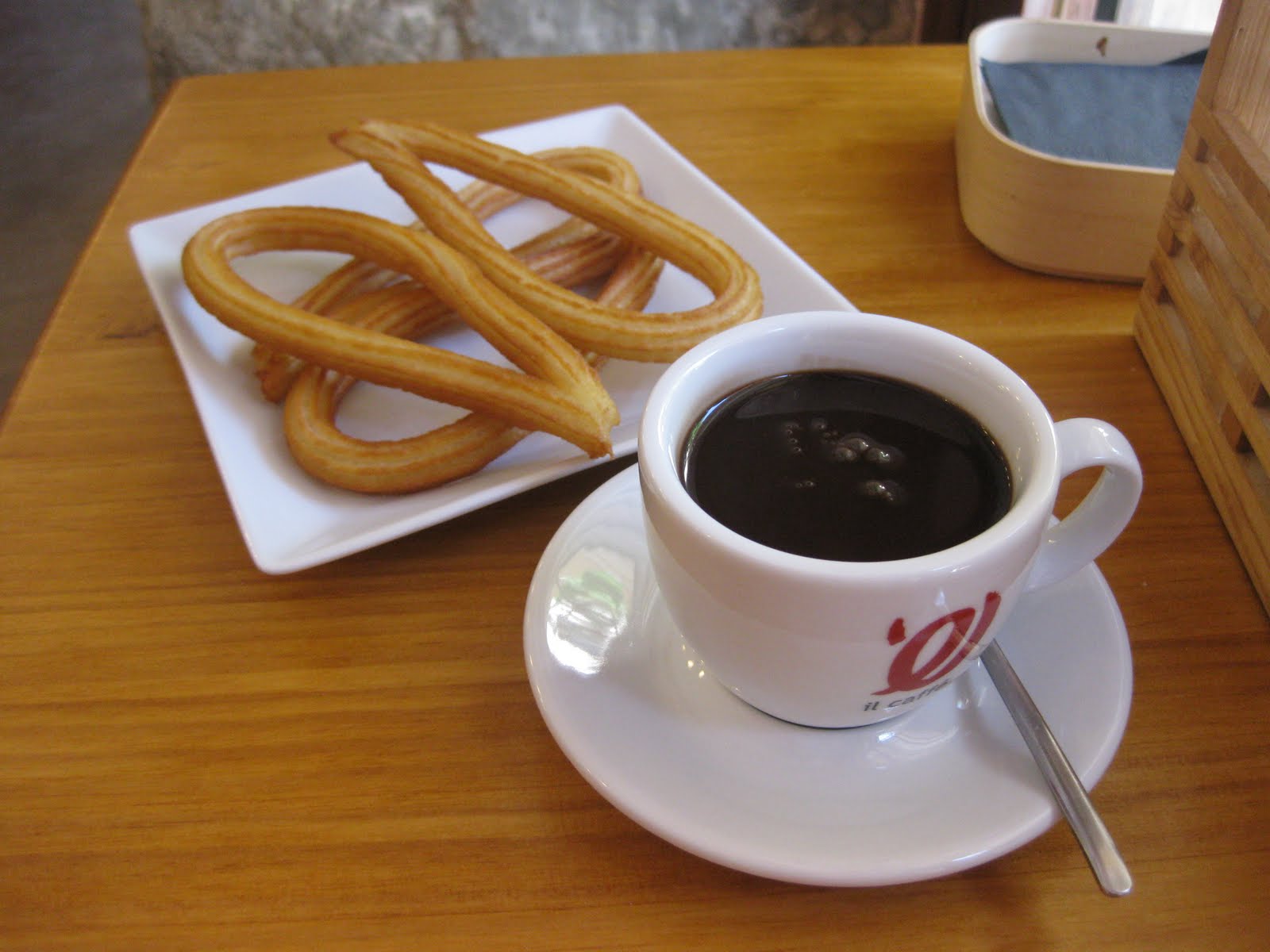
Well it was not my first time tasting this delicacy but it wasn’t until now that I have dove head first into it- Gobbling up two doses a day upon arrival in Madrid. Churros con Chocolate are a Spanish treat that are enjoyed for breakfast, after midnight, or just about anytime. A churro, most often seen stateside covered with cinnamon and sugar is a long, thin, ridged pastry that could be compared with a giant edible rope. It is deep-fried and chopped into manageable ‘straws’, which are then served up with a thick, hot drinking chocolate (like pudding).


Churros first began after the Portuguese sailed to China during the Ming Dynasty. In China they learned new culinary techniques for working with dough. The Chinese had a secret art of dough pulling that could not be shared under protection of death. However the Portuguese used the dough and instead pushed it out through a star shaped nozzle which resulted in the prismatic ridged churros seen today all over Spanish-speaking countries today.


I tested a few different venues for my devilish addiction such as the modern CH&CH but ended up frequenting the time-tested Chocolateria San Gines. First opened in 1894 San Gines is a favorite of locals and tourists alike. Every visit I made was accompanied by teeming hordes of chocolate-hungry patrons. We were served by seasoned waiters in white chef jackets who navigate the restaurant with a small fortress of triple-stacked mugs and spiky churro plates hoisted shoulder-height on trays. Watching them dance through the restaurant was like seeing an artist on stage. I think most would agree that the best part is being able to eat chocolate for breakfast and everyone else thinking that it’s normal.


So the next time you are in Spain make the effort to find this great Chocolate house and indulge in something age-old and supremely satisfying.

Friday, May 13, 2011

Madrid

Align Center

After the sleepy mountain villages and seaside retreats of the Basque country entering Madrid was both chaotic and full of divine energy. Spain’s capital is a mix of historic romance and functional modern beauty. Three days there was barely long enough to run the tourist gauntlet and explore the center and the morning of my departure was melancholic to the point where I felt I was leaving behind an age-old friend.

Any big city has famous highlights to tick off on the list of famous must-dos and we managed to tick those boxes:


The Prado: Famous art gallery that is home to many medieval and renaissance masterpieces.

Palacio Real: The Royal Palace, still used for formal ceremonies by the current King is beautiful enough to contend with Versailles and has some gorgeous Asian influences that were in Vogue at the time of construction.

Puerta Del Sol: Where all things meet. This central square is the bustling center of Madrid and will be the place to find shopping, people, restaurants, and street performers.

Playa Mayor: The heart of old Madrid, it is almost as busy as Sol, but is a cobble stoned pedestrian only area that transports you back in time along with many of the bars lining the square that have been running for over 100 years.

Parque Buen Retiro: An enormous park full of palaces with exhibits ponds, and giant monuments where you can dance, go boating, eat, exercise, or smell roses and explore Spain botanical treasures.

However there are always unique things waiting around every corner and this capital city each cobble stoned street held a myriad of treasures to uncover.

Mercado de San Miguel: A glass-sided covered market full of people eating ready to feast upon Spanish delicacies for reasonable prices and a festival like atmosphere of pure congeniality.

Chocolate and churros: I think this delicacy speaks for itself (but I will have more details on this soon!)

Bull fight: Controversial, and hard to watch at times, but an interesting novelty and something timeless that will take you back to when you watched Saturday morning cartoons.

Metro: Modern and sleek overall the highly digitized metro is always fun to explore and the people watching is prime.

Hilarious dogs: The Spanish have the some love for squish-faced dogs that I do, but of course you can find all breeds prancing around. However the bar denizens are the most hilarious. They stroll around their turf and hassle visitors for scraps. I even caught one steal 3 full slices of bread!

Even though I hit all the main spots and some more unique aspects, there is so much more to come back for! And I will definitely be returning later in the year.

Tuesday, May 10, 2011

The Basque Country


Basque Country is a mysterious region that lies on the border of modern day France and Spain. The denizens of this region were competing with the Vikings for whales and the sea before most European nations had set sail. Although there is no evidence, historians believe that the Basque sailors may well have been to America before Columbus, and help build ships for Spain’s later explorations. This region is often the host of legends for lost treasures and hidden secrets to do with the Knights Templar and lore from that period.

The Basques also speak a language that is unconnected with any other living language- Euskara. This odd language full of k’s tx’s and z’s look like some alien script and is spoken all over the area along side the respective French or Spanish.


This region has always relied deeply on the sea, iron, and of course their own resourcefulness and stubbornness. This stubbornness has allowed them to keep a strong presence and heritage throughout the years that still lives strong to this day. Despite some Basque Terrorism from the ETA (meaning and in Euskara) directed towards the Spanish government this area is a treasure to uncover.


You would never know these people were hostile as the region is comprised of sleepy villages, nestled in the mountains of the Pyrenees where life is slow and simple. Along the coast you will find a similar vibe where you can find fishing villages packed with pastry shops, pintxos (basque tapas), and of course the Beret- symbol of the Basque people.


We managed to skim through several small Basque villages between our stays in the bigger cities of Bilbao, San Sebastian, and Saint Jean-de-Luz across the French border.


Bilbao, usually deemed the industrial city is a delightful mix of a maze-like old city center and a gorgeous new town full of flower and fountain adorned squares and modern architecture, including one of three world famous Guggenheim Museums. Guides to the area don’t give this town the credit it deserves.


San Sebastian is a seaside beauty with a long stretch of sand to enjoy, a modern area called Centro which is a shoppers paradise with a mix of big European brands and boutiques (and thus I spent a day here putting my Euros to good use). Lastly but not least is the large and bustling old city with a busy square full of eateries, roads packed with Basque’s watching the football matches and no shortage of helado (ice cream).


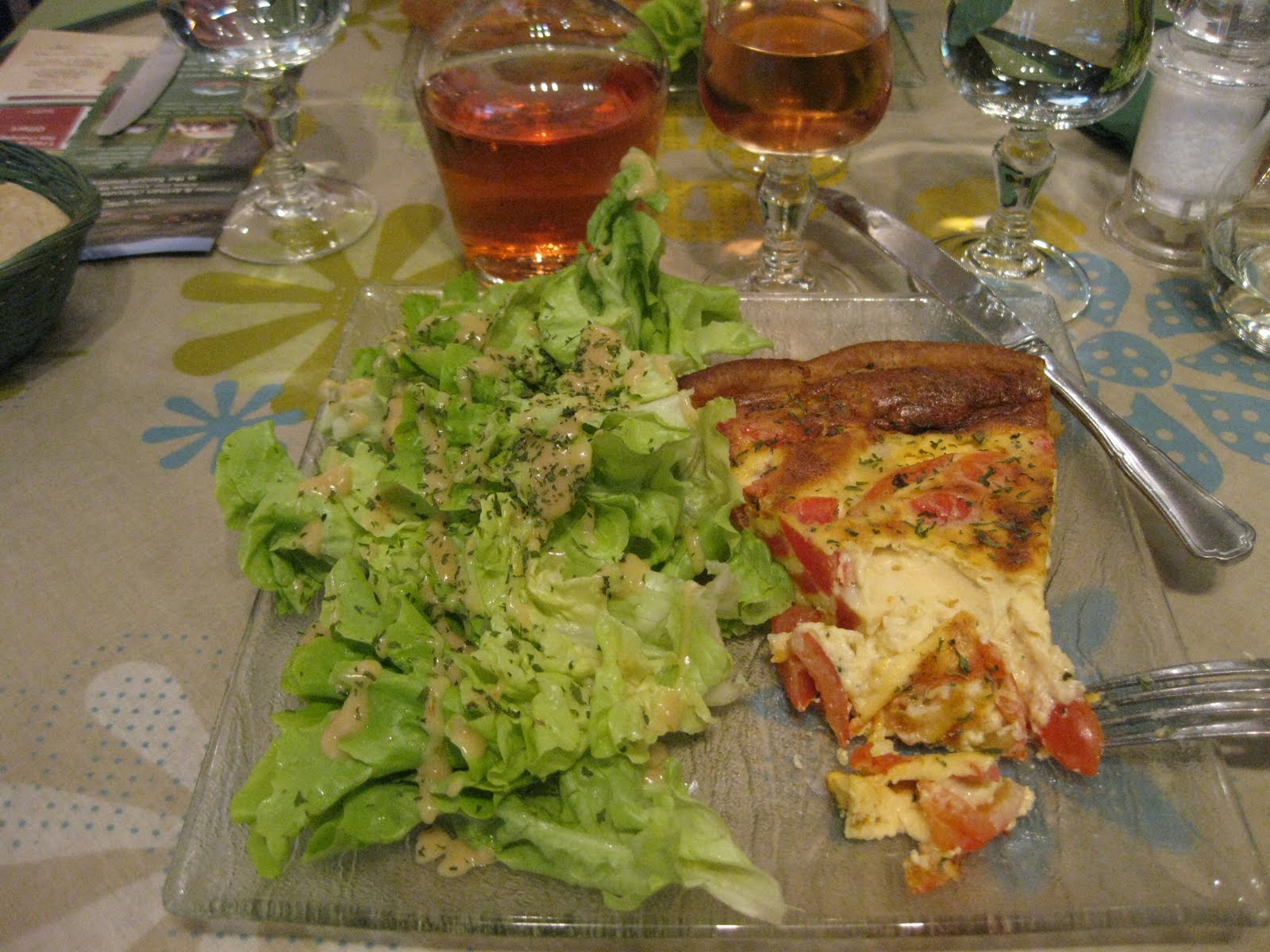
The border jump to Saint Jean-de-Luz takes no time at all and has a completely different feel from the Spanish side of Basque. Life there by the sea is calm and serene. Where the sun is good and the food is better. There are not many landmarks to brag about but this small town was historically important. Napoleon used this port during war times and was also the place where Louis XIV of France tied the knot with Marie-Therese of Spain putting end to years of squalor between the countries. Just soaking in the atmosphere and dining on gourmet quiche and macaroons is enough to make the town worth a visit.


In a nutshell the Basque Country is mix old, new, France, Spain, and something all its own. This region is a great place to go if you want to relax while flooding all five senses with something unique.

Ongi! Tres Bon! Muy Bueno! Very Good!